Barium Sulfate (BaSO₄)
Barium Sulfate (BaSO₄), with the chemical formula BaSO₄ and a molar mass of 233.391 g/mol, is one of the most important and widely used barium compounds. It is highly insoluble in water, with a solubility of only 0.00031 g per 100 g of water at 20°C. Barium sulfate has a melting point of 1,580°C, while reliable data on its boiling point is not available.
Due to its high density and exceptional insolubility, barium sulfate is extensively used as a weighting agent in drilling fluids for the oil and gas industry. In the medical field, it serves as a radiographic contrast agent for X-ray imaging of the gastrointestinal tract. It is also widely used as a filler and extender in the production of paints, paper, and rubber, where it enhances product performance and durability.
Barium Carbonate (BaCO₃)
Barium Carbonate (BaCO₃), with a molar mass of 197.336 g/mol, is another important barium compound. It has very low solubility in water (0.0014 g per 100 g of water at 20°C) but readily dissolves in acids. Barium carbonate has a melting point of 1,555°C, while its boiling point has not been established.
This compound is widely used to remove sulfate impurities, manufacture specialty glass such as television panel glass, and as a rodenticide for pest control. It should be noted that acid-soluble barium compounds are toxic and must be handled with appropriate safety precautions.
Barium Chloride (BaCl₂)
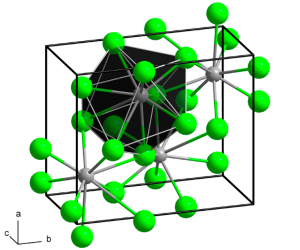
Barium Chloride has the chemical formula BaCl₂ and a molar mass of 208.232 g/mol in its anhydrous form. It is highly soluble in water, with a solubility of 37.0 g per 100 g of water at 25°C. Barium chloride has a melting point of 962°C and a boiling point of 1,560°C. Its primary applications include the production of other barium compounds, as well as use as a laboratory reagent and an industrial chemical in various manufacturing processes.
 |
Barium Hydroxide (Ba(OH)₂)
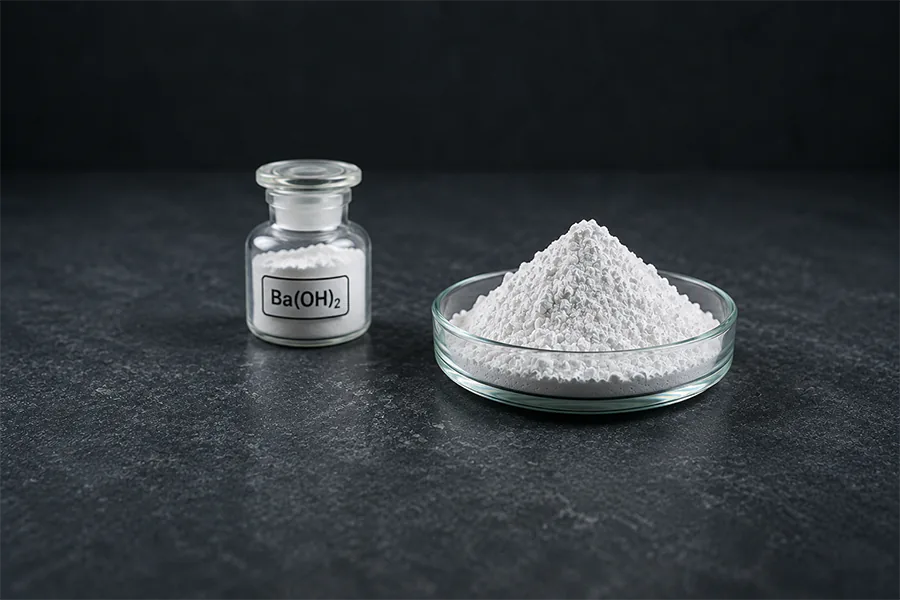
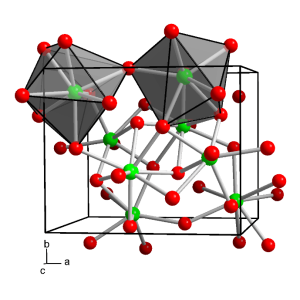
Barium hydroxide, with the chemical formula Ba(OH)₂ and a molar mass of 171.34 g/mol (anhydrous form), is an inorganic compound widely used in various industrial and chemical applications. It is moderately soluble in water, with a solubility of 4.91 g per 100 g of water at 25°C. The compound has a melting point of 408°C and does not have a well-defined boiling point, as it decomposes upon heating. Due to its strong alkaline properties, barium hydroxide is commonly used as a strong base in the chemical industry, for the production of other barium compounds, and in water treatment processes.
 |
Barium Oxide (BaO)
Barium Oxide (BaO) is an inorganic compound with the chemical formula BaO and a molar mass of 153.326 g/mol. It has a water solubility of approximately 1.5 g per 100 g of water at 20°C and reacts vigorously with both water and carbon dioxide. Barium oxide has a very high melting point of 1,972°C, while its boiling point has not been definitively established. It is widely used as a drying agent (desiccant) and as a raw material in the manufacture of glass and ceramics.
Barium Sulfide (BaS)
Barium sulfide (BaS), with a molecular formula of BaS and a molar mass of 169.393 g/mol, is an important intermediate compound used in the production of various barium derivatives. It is moderately soluble in water (8.94 g per 100 g of water at 25°C) and gradually decomposes when exposed to moisture in the air. Barium sulfide has a very high melting point of 2,229°C, making it suitable for high-temperature industrial applications.
This compound is widely used in the manufacture of pigments, the production of other barium compounds, and certain pyrotechnic applications. Due to its chemical properties, barium sulfide plays a vital role as a raw material in numerous industrial processes.
Barium Nitrate (Ba(NO₃)₂)
Barium nitrate, with the chemical formula Ba(NO₃)₂ and a molar mass of 261.34 g/mol, is a white crystalline inorganic compound. It is readily soluble in water, with a solubility of approximately 9 g per 100 g of water (9%). Its melting point is approximately 590–592°C, at which it decomposes. Barium nitrate has no defined boiling point because it decomposes before reaching its boiling temperature.
The primary importance and application of barium nitrate (Ba(NO₃)₂) stem from its strong oxidizing properties. It is widely used in the pyrotechnics industry to produce a bright green flame, making it an essential ingredient in fireworks and signal flares. Barium nitrate is also used in the manufacture of explosives, including Baratol (a mixture with TNT), as well as in certain flash powder formulations. In industrial applications, it serves as a raw material for the production of barium oxide and is utilized in the manufacturing of vacuum tubes. Due to its high water solubility, barium nitrate is considered toxic, and inhalation or ingestion can pose serious health risks.
Barium Iodide (BaI₂)
Barium iodide (BaI₂) is an inorganic compound with the chemical formula BaI₂ and a molar mass of 391.14 g/mol. It is a white crystalline solid available in both anhydrous and dihydrate (BaI₂·2H₂O) forms. The compound has a melting point of 711°C and a boiling point of 2,027°C. Barium iodide is highly soluble in water and also exhibits excellent solubility in polar organic solvents such as ethanol and acetone, a property that distinguishes it from many other barium compounds.
Barium iodide has relatively specialized applications. One of its most important uses is in radiation detection and gamma-ray spectroscopy, where its crystals are employed as scintillators for detecting ionizing radiation. It is also used as a source of iodide ions in chemical synthesis and in the preparation of organobarium compounds, owing to its solubility in organic solvents. In addition, barium iodide is utilized in high-pressure studies, materials science research, and other advanced scientific applications.
For complete specifications of Barium Hydroxide Octahydrate, please click the link below: