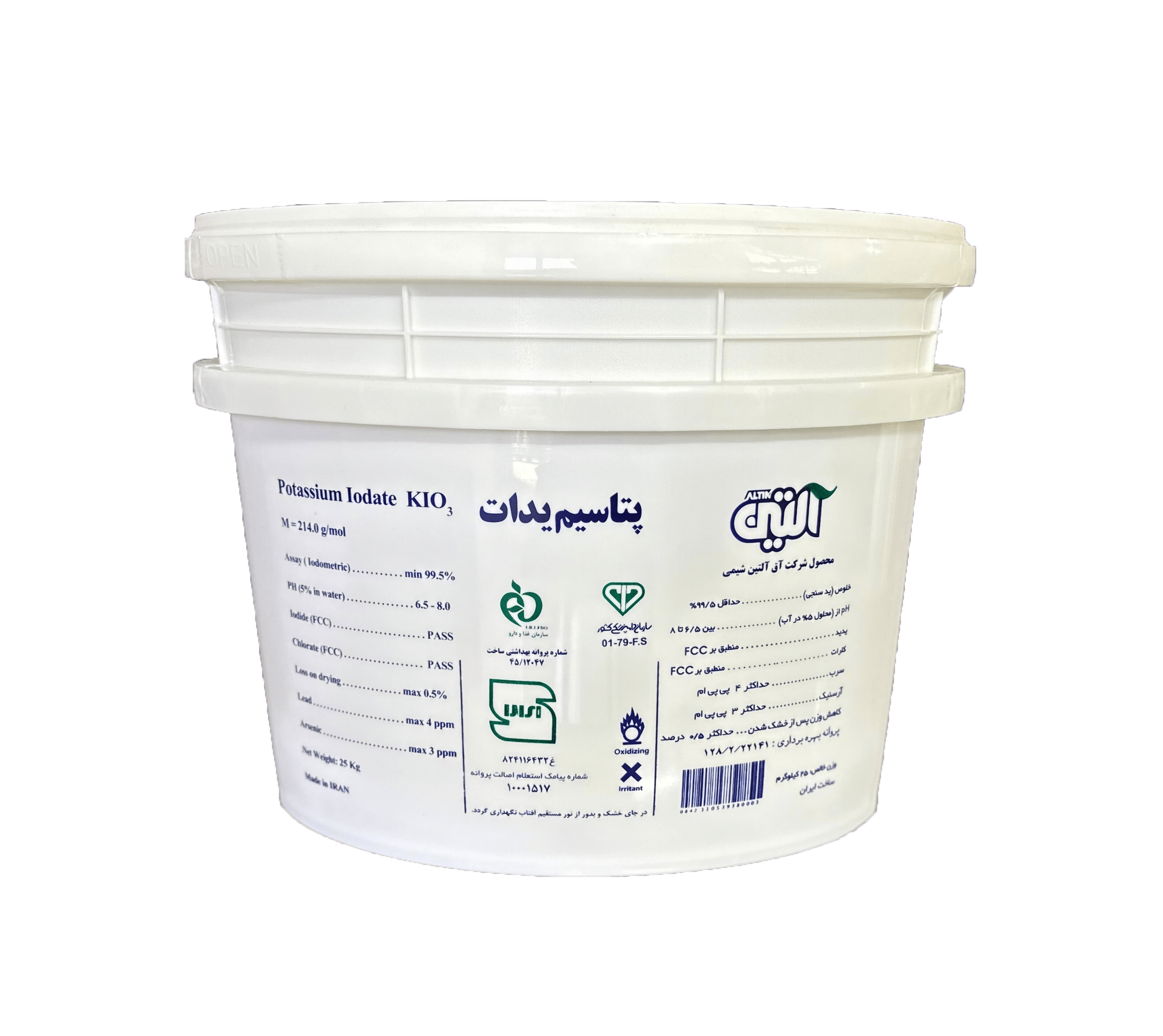
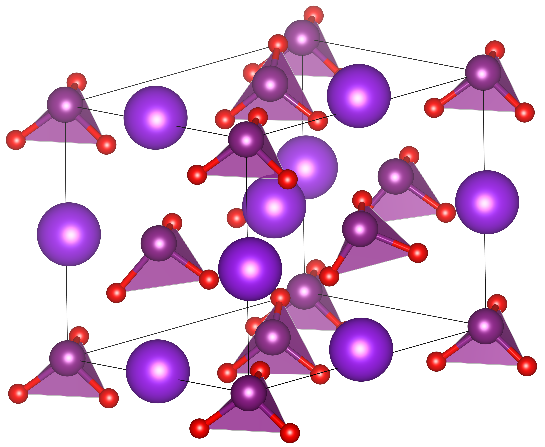
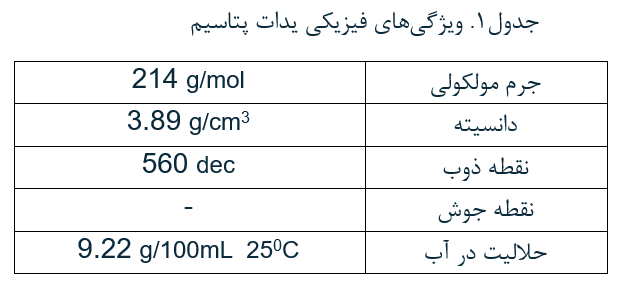
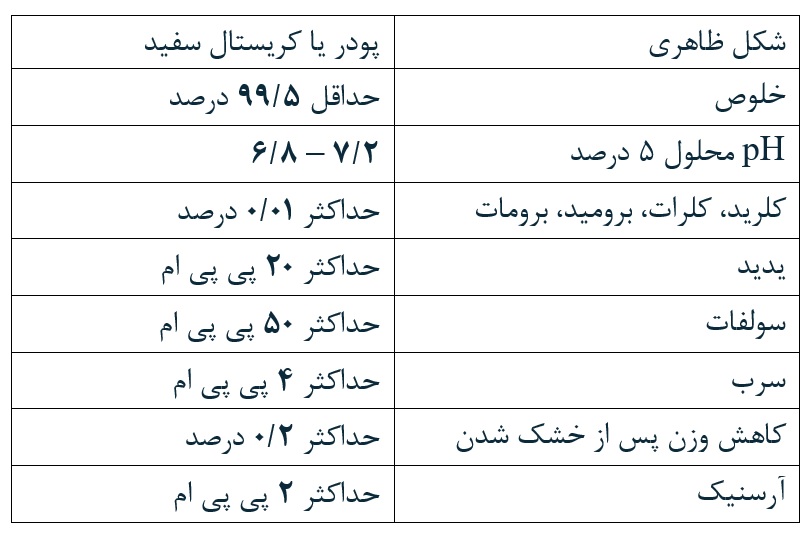
Potassium Iodate with chemical formula of KIO3[CAS No. 7758-05-6], which crystallizes in a trigonal structure, is a white powder that is considered one of the important sources of iodine and is necessary to produce thyroid hormones. Chemically, the iodates are considered oxidizing compounds and decompose at 560 degrees Celsius.
Monoclinic Structure of Potassium Iodate
Applications of Potassium Iodate :
– Iodization of table salt: A committee of the World Health Organization concluded that the use of potassium iodate to add to flour to provide the iodine needed by the human body is unacceptable because it can lead to excessive iodine intake due to the high consumption of bread, but at the same time, the committee approved the use of potassium iodate to fortify table salt, because its use in salt leads to less iodine intake than the widespread use of bread. This substance is more stable than potassium iodide, which is why potassium iodate is used to iodize table salt, especially in tropical countries.
Medicine and treatment : – Use in some iodine-based disinfectants – Preparation of potassium iodate tablets to prevent the absorption of radioactive iodine radiation in nuclear facilities.
Other uses : – In laboratory analysis in iodometric titrations and analysis of zinc and arsenic samples – Use in light polarization filters
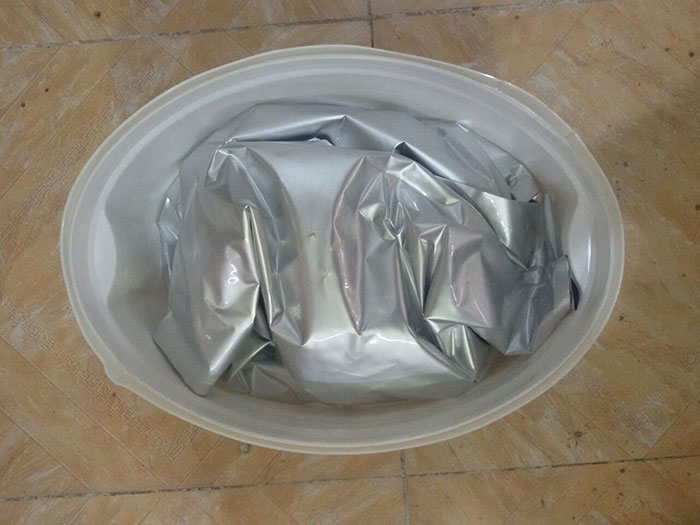
The packaging of all the company’s products is in metallized bags that include 3 layers of polyester, aluminum, and polyethylene.
Safetyand Storage:
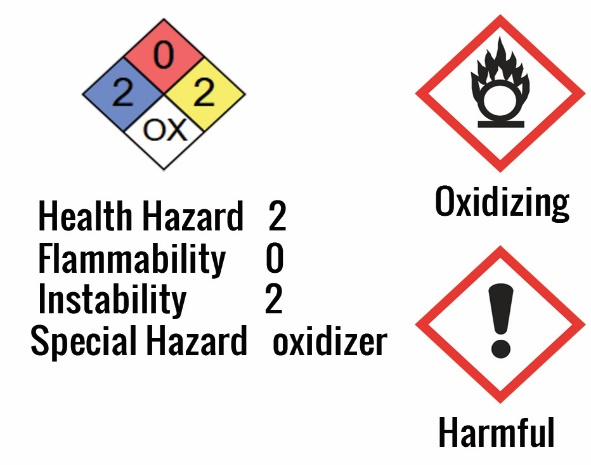
Potassium iodate may react severely with combustible and reducing agents such as aluminum, organic compounds, hydrogen peroxide, and sulfides. The products resulted from its dangerous decomposition include hydrogen iodide, iodine, and potassium oxides. Avoid storing this material next to the above compounds and store it in an environment with low humidity and away from direct light or heat.